

Table of Contents
- How to Block Snoring Noise: What Actually Works
- Earplugs for Snoring: Foam, Silicone, and Wax Compared
- White Noise for Snoring: Masking the Sound Instead of Fighting It
- Sleep Headphones for Snoring: A Comfortable Alternative to Earbuds
- How to Sleep Next to a Snorer Without Losing Your Mind
- A Step-by-Step Plan to Block Snoring Noise Tonight
- Safety and Warning Signs: When Snoring Needs a Doctor
- Frequently Asked Questions
Last Updated: October 9, 2026
How to Block Snoring Noise: What Actually Works
How to block snoring noise comes down to two jobs: softening the sound reaching your ears, and covering what's left with something steady. The most reliable fix pairs well-fitted earplugs with a continuous sound source, because each one covers the other's weak spots.
This guide walks through practical steps, from picking the right earplug to knowing when a snore needs a doctor's attention.
Here's the part most guides skip: the person snoring isn't the one searching for answers at 2 a.m. You are. So this article is written for the listener, not the snorer.
The American Academy of Sleep Medicine notes that snoring happens when air can't flow freely through the nose and throat. That tissue vibrates, and the sound travels. You can't fix the airway from the other side of the bed. But you can change what reaches your ears.
Below, we'll show you exactly what works, what doesn't, and how to build a routine you can start tonight.
Earplugs for Snoring: Foam, Silicone, and Wax Compared
Earplugs are the fastest way to cut snoring noise, and foam gives you the most decibels of reduction for the least money. The catch is comfort: foam expands and presses outward, which is exactly what side sleepers don't want.
Silicone and wax plugs sit differently. They seal the ear opening rather than filling the canal, so they feel less invasive. They also tend to stay put when you roll onto your side.
| Type | Typical NRR | Comfort on Your Side | Best For |
|---|---|---|---|
| Foam (roll-down) | 30-33 dB | Low | Back sleepers, tight budget |
| Pre-molded silicone | 22-27 dB | High | Side sleepers |
| Moldable silicone putty | 22-25 dB | High | Small or irregular ear canals |
| Wax/cotton | 20-25 dB | High | Light snorers, occasional use |
| Custom-molded | 25-30 dB | Highest | Frequent users, side sleepers |
What the NRR actually means. The Noise Reduction Rating is a lab number, not a real-world guarantee. In practice, most people get roughly half the rated reduction because of poor fit. A foam plug rated at 33 dB might deliver 15-18 dB of real attenuation if it never fully expands. That is still enough to take the edge off a snore, but it will not silence a loud one.
Fit is the whole game. A common mistake is jamming foam plugs too deep. That causes soreness by morning and makes you abandon them entirely. The correct method for foam is to roll it into a tight cylinder, pull the ear up and back to straighten the canal, insert, and hold for 20-30 seconds while it expands. If it feels loose after a minute, it is too small.
For side sleepers, the pressure point matters more than the rating. A plug that presses into the pillow will wake you up regardless of how many decibels it blocks. That is why pre-molded silicone and low-profile wax plugs often beat higher-rated foam for side sleepers in real bedrooms, even though the foam wins on paper.
A realistic expectation. Earplugs alone rarely make a loud snorer inaudible. They reduce the perceived volume enough that a masking sound can finish the job. Treat them as the first layer, not the whole solution.
White Noise for Snoring: Masking the Sound Instead of Fighting It
White noise doesn't silence a snore. It raises the floor of sound in the room so the snore has less contrast to stand out against. That's why a fan or a steady hum can make a loud snore feel less jarring even though nothing got quieter.
The mechanism, briefly. Your brain is tuned to notice sudden changes in sound. A snore is a repeating spike above a quiet baseline, which is why it wakes you even at moderate volume. A continuous masking sound raises that baseline so the spike is smaller relative to everything else.
Your masking options, ranked by how well they actually work for snoring:
- A box fan or ceiling fan. Cheap, steady, and broadband. The low-frequency rumble is the part that helps most, because it overlaps with the lower tones of a snore. Downside: seasonal, and some people find the moving air drying.
- A dedicated white noise machine. More controllable than a fan and usually has a range of sounds. Look for one with a true "brown" or "pink" noise setting, those have more low-frequency energy than pure white noise and tend to mask snoring better.
- A white noise app on a phone or tablet. Convenient, but phone speakers are weak on low frequencies, which is exactly the band you need. If you go this route, put the device close to your head, not across the room.
- A sleep headband with flat speakers. The most effective placement because the sound is at your ear, not across the room. This is the option that lets you use a lower volume and still get masking benefit.
The volume rule. Keep the masking sound just loud enough that the snore stops pulling your attention. If you can still clearly hear the snore pattern, nudge it up. If you are now listening to the masking sound itself, it is too loud.
Where masking fails. If the snore is louder than the masking sound, your brain still picks it out. Masking also does nothing for the snorer's airway, and it does nothing for the health risks of sleep apnea. It is a comfort tool for the listener, not a treatment.
The combination that works. Pair masking with earplugs. Earplugs knock down the peak of the snore; masking fills the residual with something steady. Together they cover each other's weak spots in a way neither does alone. This is the setup most consistent sleepers land on after trying the options one at a time.
SleepBandZ Wireless Sleep Headphones →
Sleep Headphones for Snoring: A Comfortable Alternative to Earbuds
Sleep headphones solve a problem earplugs and speakers can't: they put the sound right at your ear without pressing into it. Regular earbuds dig into your ear canal when you lie on your side. That pressure is what causes soreness by morning.
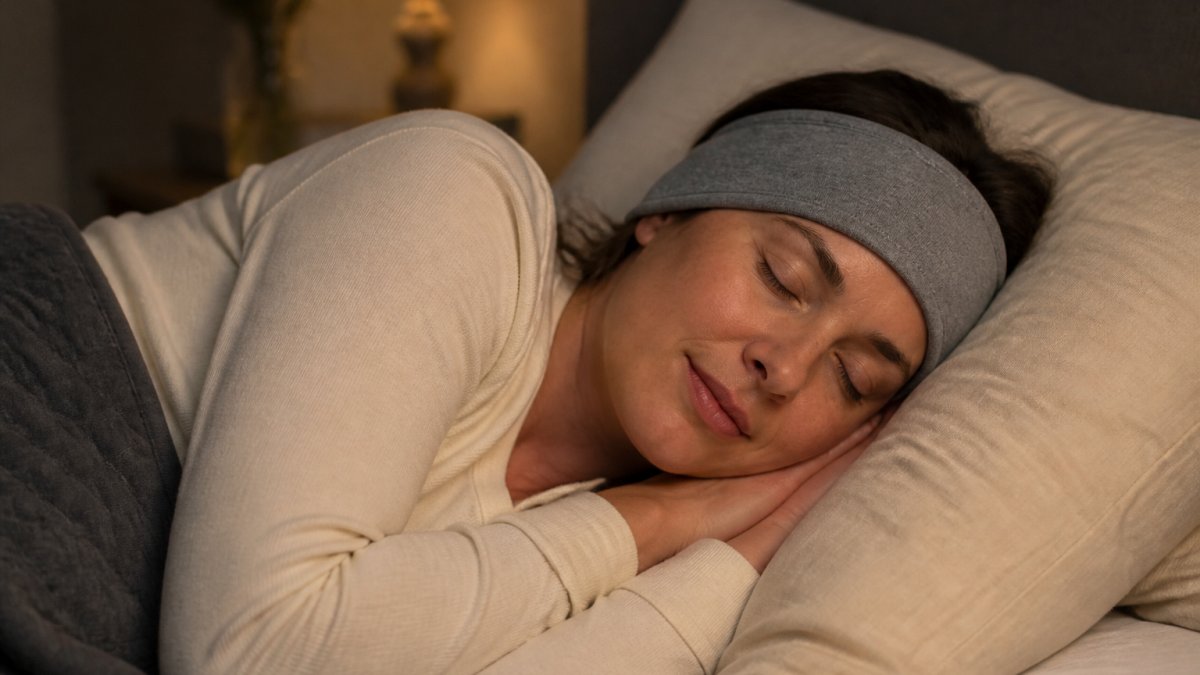
SleepBandZ Wireless Sleep Headphones are built for exactly this. The ultra-thin, soft speakers sit inside a cozy headband, so they're virtually undetectable when you lie down. You can play white noise, a podcast, or calming music without anything pressing into your ear.

The headband is Bluetooth-enabled and USB-chargeable, so there's no cord to tangle when you move. For side sleepers, that combination of soft fabric and flat speakers is the whole point.
If you've tried earbuds and given up because of ear pain, this is the category worth trying next.
How to Sleep Next to a Snorer Without Losing Your Mind
Sleeping next to a snorer is a shared problem, which means the fix works better when you both agree on it. A partner who knows the plan is more likely to help than one who wakes up to a pillow over your head.
Start with a conversation, not a complaint. "I'm not sleeping and I need to try something" lands better than "you're keeping me up."
- Agree on a trial period for any new setup, usually one to two weeks
- Share the plan: earplugs, masking sound, and a sleep headband
- If nothing works, agree that a doctor's visit is the next step, not a failure
A common mistake is suffering in silence for months. Resentment builds faster than any tolerance for the noise.
A Step-by-Step Plan to Block Snoring Noise Tonight
You can build a workable setup in one evening. Here's the order we'd follow.
- Pick your earplugs. Try silicone first if you sleep on your side. Foam if you sleep on your back.
- Test the fit for 10 minutes. If it aches, size down or switch types before bed.
- Add a steady sound. A fan, a white noise app, or a sleep headband playing a low, even track.
- Place the sound between you and the snorer. Closer to your ears beats across the room.
- Set your volume low. Loud masking just becomes a second noise problem.
- Give it three nights. Your brain needs time to stop treating the setup as new.
- Adjust one thing at a time. Changing everything at once tells you nothing about what worked.
If night three is still rough, swap the earplug type before you change anything else.
Safety and Warning Signs: When Snoring Needs a Doctor
Snoring is usually harmless, but some patterns point to something worth checking. The one to watch for is obstructive sleep apnea, where breathing pauses during sleep (the NHS). A listener often notices this before the snorer does.
Watch for these signs:
- Gasping or choking sounds during sleep
- Long pauses in breathing followed by a snort
- Extreme daytime sleepiness in the snorer
- Morning headaches or a dry mouth
If you notice any of these, the right move is a medical evaluation, not a louder fan. A doctor may suggest a sleep study to check for a sleep disorder.
Masking the sound helps you sleep. It does nothing for the snorer's health. Those are two separate problems, and only one of them is yours to solve with earplugs.
Frequently Asked Questions
Do earplugs actually block snoring noise?
Yes, earplugs reduce snoring noise, but how much depends on their noise reduction rating (NRR). Foam earplugs typically block 30-33 decibels, while silicone and wax options offer less. Snoring often exceeds 50 decibels, so earplugs may not eliminate the sound entirely. They work best when combined with white noise or sleep headphones for a layered approach. If you find earplugs uncomfortable or they cause ear pain, a sleep headband with flat speakers is a gentler alternative for blocking snoring noise.
Can white noise or sleep headphones help mask snoring?
White noise and sleep headphones work by raising the background sound level so snoring becomes less noticeable. White noise for snoring is most effective when played at a volume just below the snore, making the peaks and valleys blend together. Sleep headphones for snoring, like SleepBandZ, add a comfortable headband design that stays put for side sleepers and won't hurt your ears. The combination of masking sound and physical comfort makes it easier to fall asleep and stay asleep despite the noise.
What is the best way to sleep next to someone who snores?
Start with a layered approach: earplugs or sleep headphones for you, plus a white noise machine. Encourage the snorer to try side sleeping, as back sleeping often worsens snoring. If noise still disrupts your sleep, consider separate sleep surfaces or a temporary bed swap on bad nights. Communication is key. Discuss the issue calmly and agree on solutions together. If the snoring is loud, persistent, or accompanied by gasping, the snorer should see a doctor to rule out obstructive sleep apnea.
When should someone who snores talk to a doctor?
See a doctor if snoring is accompanied by gasping, choking, or pauses in breathing during sleep, or if the snorer feels excessively sleepy during the day despite a full night's rest. These can be signs of obstructive sleep apnea, a condition that raises the risk of heart problems and other health issues. A sleep study can confirm a diagnosis. Even without those symptoms, persistent loud snoring that disrupts a partner's sleep is worth a medical evaluation to explore underlying causes like nasal congestion or airway obstruction.
A quiet night shouldn't cost you your comfort. If earplugs hurt and earbuds press into your ear, SleepBandZ Wireless Sleep Headphones give you ultra-thin, soft speakers inside a cozy headband made for side sleepers. With Bluetooth audio, USB charging, and a fit that stays put while you move, you can drift off to white noise or a podcast instead of a snore. Get started with SleepBandZ and wake up rested.