

Table of Contents
- What Wireless Sleep Headphones Are and Why They Matter
- Wireless Sleep Headphones for Side Sleepers: Design and Fit
- Sleep Headphones Battery Life: What to Expect
- Sound Quality, Comfort, and Noise Blocking
- Washable Sleep Headphones: Care and Durability
- Sleep Headphones vs Earbuds: Which Is Right for You
- Common Mistakes to Avoid When Buying Sleep Headphones
- Frequently Asked Questions
Last Updated: October 16, 2026
What Wireless Sleep Headphones Are and Why They Matter
Wireless sleep headphones are specialized audio devices that deliver sound while you rest without the pressure of traditional earbuds. They integrate ultra-thin speakers into a soft, flexible headband that conforms to your head shape.

The key difference is comfort and positioning. Standard earbuds press into your ear canal, which becomes painful during extended wear. Sleep headphones use a headband format that distributes pressure evenly across your head, making them virtually undetectable when lying on your side. They connect via Bluetooth, eliminating wired tangles while letting you move freely.
Many people turn to wireless sleep headphones to mask disruptive sounds like snoring, traffic, or household noise, or to listen to podcasts, audiobooks, or white noise that helps them fall asleep faster. The combination of comfort and functionality makes these devices valuable for light sleepers, side sleepers, and anyone whose sleep quality suffers from environmental noise.
Wireless Sleep Headphones for Side Sleepers: Design and Fit
Side sleeping is the most common sleep position, but it creates unique challenges for audio devices. When you lie on your side, pressure builds on your ear, making standard earbuds painful and potentially damaging to ear tissue. Wireless sleep headphones for side sleepers keep speakers positioned away from direct pressure points.
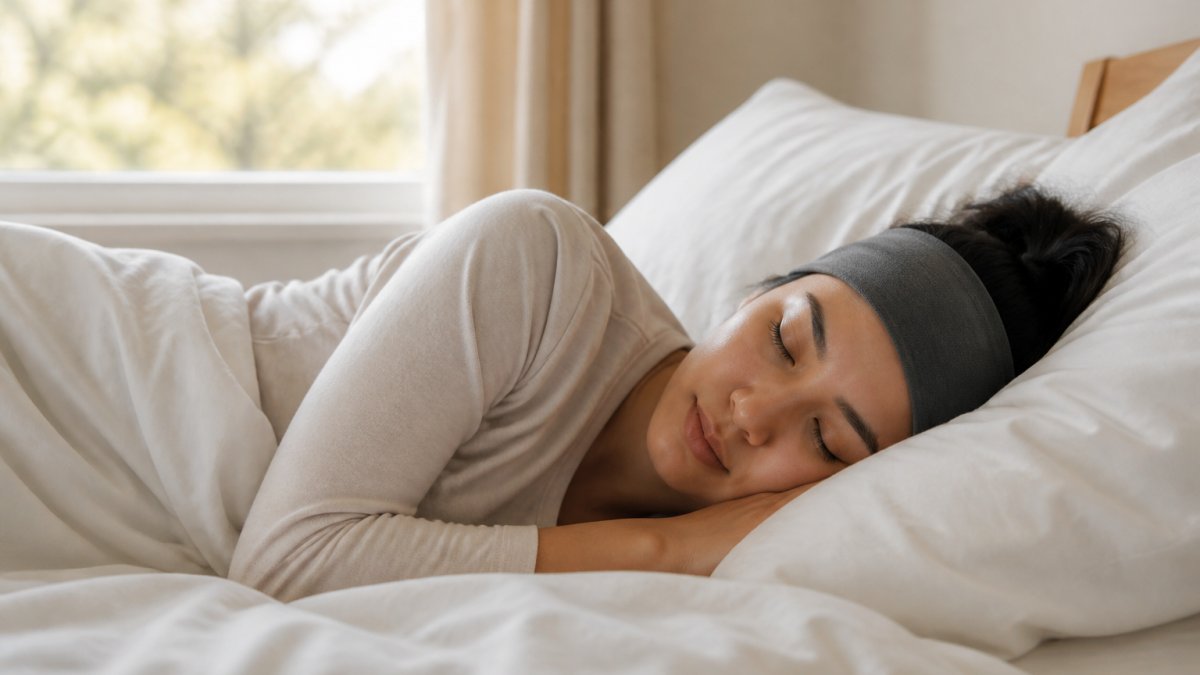
The best sleep headphones for side sleepers use a headband design that sits across your forehead and temples rather than your ears, keeping speakers suspended slightly above your ear so sound reaches you without direct pressure.
Fit consistency is crucial for side sleepers. A headband that shifts during sleep becomes uncomfortable or fails to deliver sound properly.
SleepBandZ wireless sleep headphones feature ultra-thin speakers positioned to avoid ear contact entirely, ideal for side sleepers who've experienced discomfort with other brands. The soft headband material breathes naturally, so you won't feel overheated during a full night of sleep.
Sleep Headphones Battery Life: What to Expect
Battery life is the most practical specification for wireless sleep headphones, because a device that dies at 3 AM stops masking noise exactly when you need it most.
What drains the battery overnight
- Volume level. Higher volume requires more amplifier power. White noise or ambient soundscapes at a moderate level typically draw less current than music or podcasts at high volume.
- Bluetooth connection stability. A weak connection forces the headphones to re-transmit and re-negotiate, increasing power draw. Keeping your audio source within about 10 meters (33 feet), with a clear line of sight, reduces this overhead.
- Streaming versus stored audio. Streaming from a phone or tablet keeps both the Bluetooth radio and the source device active. Some sleep headphones include built-in memory or preloaded sounds, which can reduce radio activity and extend runtime.
- Standby and auto-off behavior. Many models enter low-power standby when no audio plays, but some remain fully active. A reliable auto-off timer preserves charge if you fall asleep before your audio ends.
- Active features. If a model offers active noise cancellation (ANC), expect it to reduce battery life noticeably compared with passive sound masking. Most sleep headphones rely on passive isolation and audio masking, which is less power-intensive.
Charging speed and method
USB charging is standard across most wireless sleep headphones, and a full charge typically takes 1-2 hours. Quick-charge features are increasingly common: a 15-30 minute top-up can provide several hours of playback if you forget to charge before bed.
A practical charging routine
A common pattern among nightly users is to charge after every two to three nights rather than waiting for a full drain. Lithium-ion batteries degrade faster when repeatedly drained to zero, so partial top-ups preserve capacity over the device's lifespan.
How to compare battery claims across models
When comparing specifications, look for the tested condition behind the rating. A claim of "10 hours" may assume 50% volume, a specific codec, and no ANC.
SleepBandZ wireless sleep headphones use USB charging and deliver consistent battery performance across 8+ hours of nightly use, with a full charge taking approximately 90 minutes.
Sound Quality, Comfort, and Noise Blocking
Sound quality in wireless sleep headphones isn't judged like studio or commuting headphones. The design constraints, ultra-thin speakers, a fabric headband, all-night comfort, mean sleep headphones prioritize intelligibility and low-fatigue listening over dynamic range.
What good sleep-headphone sound actually means
- Speech clarity at low volume. Podcasts and audiobooks should remain intelligible without turning up the volume. If you have to strain to follow dialogue, the speakers are either poorly positioned or tuned with too much bass.
- Smooth treble. Sharp or sibilant high frequencies become fatiguing over hours. A gentle treble roll-off is preferable for sleep audio, even if it measures less "accurate" than a reference curve.
- Controlled bass. Deep bass can feel like vibration against a pillow or mattress rather than sound. Sleep headphones generally benefit from modest, tight bass rather than a boosted low end.
- Natural sound distance. Speakers positioned slightly away from the ear canal create a sense that audio comes from around you rather than pressed into your head, a comfort feature as much as a sonic one.
Passive isolation versus active noise cancellation
This is the most misunderstood part of sleep-headphone shopping. Passive noise isolation is a physical barrier: the headband fabric and speaker housing block some external sound by covering the ear area.
Neither approach treats a sleep disorder. Sleep headphones are audio devices, not medical equipment. If you have chronic insomnia, sleep apnea, or another diagnosed condition, talk to a healthcare professional rather than relying on a consumer product.
Comfort as an acoustic feature
Comfort and sound are linked in sleep headphones.
Accessibility and hearing considerations
SleepBandZ Wireless Sleep Headphones →
Sleep headphones can help people with hearing sensitivity, but volume limits and one-ear listening deserve attention.
How to evaluate noise blocking before you buy
Look for specific language in product descriptions. "Blocks snoring" is a marketing claim; "passive isolation with fabric over the ear" is a mechanism.
Washable Sleep Headphones: Care and Durability
Sleep headphones accumulate sweat, skin oils, and dust during nightly use, so they need regular cleaning to maintain hygiene and prevent degradation. Washable headphones simplify maintenance and extend the device's useful life.
Look for sleep headphones with removable, machine-washable headbands, so you can clean the fabric without risking damage to electronics. Speaker components should be sealed or protected so water can't reach internal circuitry. Most quality models use water-resistant coatings on speaker housings, letting you wash the headband safely.
Durability depends on material quality and construction. Premium elastic fabric withstands repeated stretching and washing better than cheaper alternatives, seams should be reinforced so they don't separate after dozens of wash cycles, and speaker connections must handle the movement of washing and drying.
Many users report that wireless sleep headphones last with proper care, though this varies based on usage intensity and build quality. Daily washing of the headband, combined with careful storage and regular charging, extends this timeframe significantly.
Sleep Headphones vs Earbuds: Which Is Right for You
The choice between sleep headphones and earbuds depends on your sleep position, ear sensitivity, and audio preferences. Both have legitimate advantages.
Earbuds offer portability and work well for back or stomach sleepers, taking up minimal space and serving other activities beyond sleep. However, they create pressure inside your ear canal that becomes painful during 8+ hours of continuous wear, and side sleepers find lying on their side compresses earbuds uncomfortably against the ear.
Sleep headphones prioritize comfort for extended nighttime wear. The headband design keeps speakers away from your ear canal, eliminating pressure-related pain, with soft materials and a secure fit for people who move during the night. The tradeoff is that they're bulkier and less portable than earbuds.
| Feature | Sleep Headphones | Earbuds |
|---|---|---|
| Comfort for side sleepers | Excellent | Poor |
| Portability | Moderate | Excellent |
| Ear canal pressure | Minimal | High |
| 8+ hour wearability | Excellent | Uncomfortable |
| Daytime use versatility | Limited | Excellent |
| Cost | Moderate | Variable |
Consider sleep headphones if you sleep on your side, wear audio devices for 8+ hours nightly, or have experienced ear pain from earbuds. Choose earbuds if you sleep on your back, need portability for travel, or use audio devices for multiple purposes throughout the day.
Common Mistakes to Avoid When Buying Sleep Headphones
Several predictable errors lead to poor purchasing decisions. Understanding them helps you choose wireless sleep headphones that deliver on your expectations.
The most common mistake is prioritizing sound quality over comfort. People accustomed to high-fidelity headphones expect similar audio performance, but sleep headphones sacrifice some audio quality for comfort and durability.
Another frequent error is ignoring fit testing before purchase. Headphones that fit well in a store might feel different lying down for 8 hours.
Underestimating battery drain is a third mistake. People assume wireless sleep headphones last a full week on a single charge, but nightly use depletes the battery significantly. Plan to charge after every 2-3 nights, not weekly.
Failing to verify washability is another oversight. Some sleep headphones look washable but have sealed seams or non-removable components. Check specifications to confirm the headband is truly machine-washable and speaker connections can withstand moisture.
Finally, many overlook warranty coverage. Sleep headphones see daily use and exposure to sweat and moisture, so a 30-day return window isn't sufficient. Look for a warranty covering manufacturing defects.
Choosing the right wireless sleep headphones requires balancing comfort, sound quality, battery life, and durability.
SleepBandZ wireless sleep headphones address the specific needs of side sleepers and light sleepers with ultra-thin, soft speakers integrated into a breathable headband. With USB charging, reliable battery performance, and a washable design, they're built for nightly use. Get started with SleepBandZ wireless sleep headphones and experience how proper sleep audio support transforms your rest quality.
Frequently Asked Questions
What makes wireless sleep headphones different from regular earbuds?
Wireless sleep headphones integrate speakers into a soft headband rather than inserting into your ears. This design prevents ear pain and pressure that regular earbuds cause during all-night wear. The ultra-thin speakers sit against your head, making them undetectable when lying down. For side sleepers especially, this eliminates the discomfort of earbuds pressing into the ear canal, allowing you to sleep naturally without adjusting them throughout the night. Sound quality remains clear while comfort improves dramatically.
How long does the battery last on wireless sleep headphones?
Battery life varies by model, but quality wireless sleep headphones typically last 8-12 hours on a full charge, which covers a full night of sleep plus some daytime listening. Look for models with USB charging that recharge fully within 1-2 hours. Check specifications carefully before purchasing, as some budget options may offer shorter battery life. Avoid products with battery alerts that could wake you during the night; choose models that simply power down silently when depleted.
Can wireless sleep headphones actually block out snoring?
Wireless sleep headphones block snoring through a combination of passive noise blocking and active sound masking. The headband design creates a seal against your head that reduces ambient noise penetration. Playing white noise, nature sounds, or pink noise masks remaining snoring and disruptions. They won't eliminate snoring completely like noise-cancelling earbuds, but they significantly reduce its impact on your sleep quality. Most users report needing lower volume levels than traditional earbuds to achieve the same masking effect.
Are washable sleep headphones durable for nightly use?
Washable sleep headphones designed for nightly wear typically feature removable, machine-washable headbands with sealed speaker components. Check product specifications for water-resistance ratings and washing instructions. Quality models withstand regular washing without degrading sound quality or speaker performance. The headband fabric should be breathable and soft to prevent heat buildup during sleep. With proper care, well-made wireless sleep headphones last of nightly use. Avoid submerging the entire unit; remove the speakers or follow manufacturer guidance for cleaning.